| ||||||
Erongaricuaro
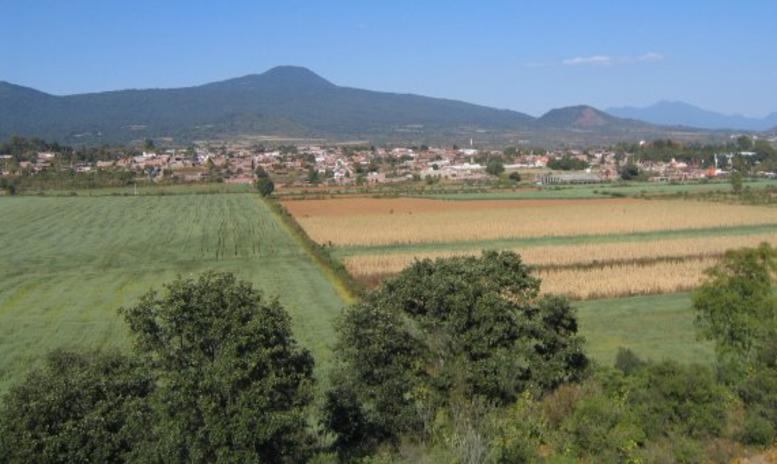
Erongaricuaro, which means "place of waiting" or "place of the watchtower" in the Purhépecha language, is a mestizo village in the state of Michoacán, Mexico. It is located about an hour and a half drive from Morelia and Uruapan, and just 20 minutes from the famous colonial town of Patzcuaro. The estimated population is 5,000 people.
Eronga, lies just across Lake Pátzcuaro from Pátzcuaro and the farthest Left Bank of the Lake. The native Purhépecha from the pueblos near Eronga come to market day on Tuesdays. This ancient town was one of the critical trade points for the Purhepecha empire. Friendly to outsiders, Eronga has hosted artists such as Frida Kahlo and Diego Rivera along with the fathers of surrealism, Andre Breton and Leon Trotsky. Former president Lazaro Cardenas used it as his hideway across the lake before the road arrived to Eronga.
The lively Eronga plaza has many exotic trees displaying the area's tolerant climate.
Altitude above sea level: 2,080 meters or 6824 feet
Temperature: Maximum 24°C or 75°F; Minimum 6°C or 43°F
Erongarícuaro is hidden high in the mountains of Michoacán. To the East is Lake Pátzcuaro, one of Mexico's highest lakes.
The town retains its ancient atmosphere. It consists of largely one-story adobe or plaster-over-brick buildings with red tile roofs. The streets are dusty cobblestones traveled by horse and car. The plaza has a fountain, stage and amazing collection of trees. Wandering the streets uphill, there is a cemetery and a chapel.
The pretty Purhepecha village of Eronga lies on the west side of the lake about 17km/11mi from Pátzcuaro. During the Second World War a group of French Surrealists found refuge in Eronga.
Notable residents of Eronga
Lázaro Cárdenas The popular President of Mexico, was rumored to take his boat across the lake where no road reached. He began from his large mansion in Patzcuaro, which now houses CREFAL and upon reaching Erongaricauro was free to make fiestas with his girlfriends in Mansion Las Rosas, right on the plaza.
During Mexico's postwar art scene:
Trotsky, Frida Kahlo, Diego Rivera, Jean Charlot, Andre Breton.
Roberto Matta, Remedios Varo, Esteban Francis, Pierre Mabille, Benjamin Péret, Gordon Onslow Fordand his wife Jacqueline Johnson, an American writer, Peruvian poet César Moro, anthropologist Miguel Covarrubias, painter Carlos Mérida, Surrealist painter Wolfgang Paalen with painter, poet Alice Rahon, and photographer Eva Sulzer.
Don’t miss these Eronga attractions:
The Plaza.
The furniture factory.
The Church The naturalistic crucifix above the altar is known locally as 'El Señor de la Misericordia'. The Catholic church is an example of 16th century "Pidgin Plateresque" architecture, a style unique to highland Michoacán.
Centro's large plaza often hosts concerts, Artisan sales, concerts and events.
Monastery. The Church and monastery was founded by the Franciscans. Occasionally the door to the seminary is open and you can see the gardens and views of the lake. Occasional concerts.
After 20 years of development, classic issues of handmade furniture from Mexico such as raw material quality, legal compliance, customer service and reliability have been resolved. Other issues of commerce, art, quality, sustainability, viability, finance and craft have lead to a co-operatively owned corporation recognized around the world by designers, architects, buyers, hospitality industry professionals and homeowners for its unequaled products and artistry. As we hone the skills necessary to deal with these issues, pitting our hand work against industrial engineering, our style changes. Sometimes the styles evolve slowly or even reluctantly and other times, our style pioneers revolutionary concepts like our rolling screen-bookshelves.
MFA/ERONGA was founded by Steve and Maureen Rosenthal in the town of Erongaricuaro, Michoacán, which they call home since 1970. Wood working traditions in this area pre-date the Spanish introduction of joinery and decoration in the 16th century. Lacquer and its native form, maque, have continued to flourish throughout the centuries benefiting as well as suffering from cross pollination of techniques, styles and design. Nowhere else in the New World did this craft succeed so early or so well as it did in Michoacán. Furniture, masks, toys, columns and other architectural elements still play an important role in the state's rural economics.
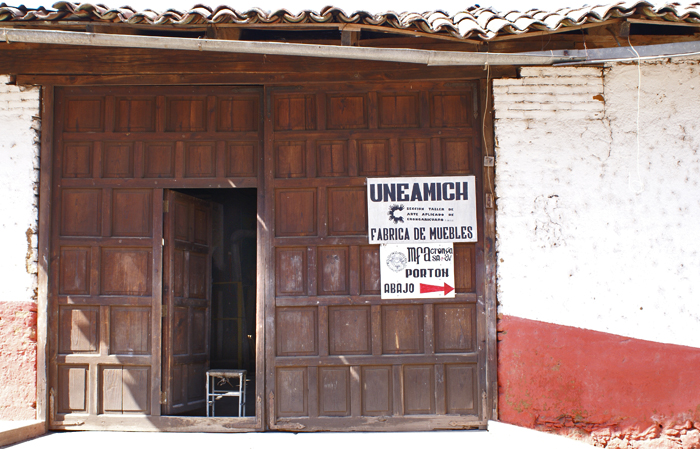
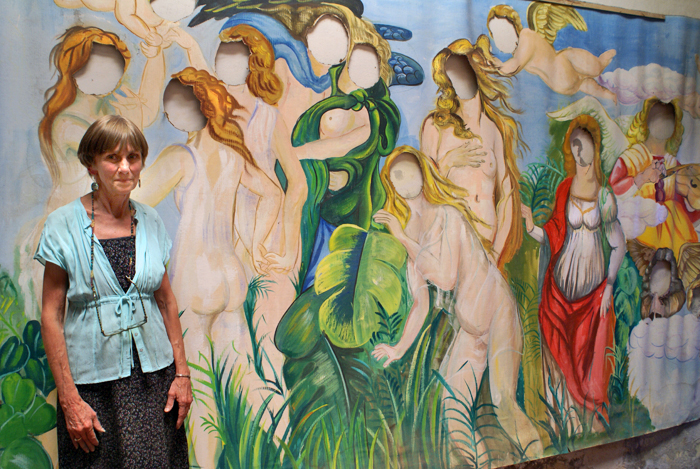
In 1981, a state craft project entitled "School-Workshop" hired Maureen and Steve Rosenthal to head a woodworking school-workshop based on their experience as designers and exporters of traditionally handmade furnishings from the Purepecha (Tarascan Indian) town, Cuanajo. The project's goal was rural development and became the most economically successful amongst the state's 80 school work-shops, lasting over 6 years.
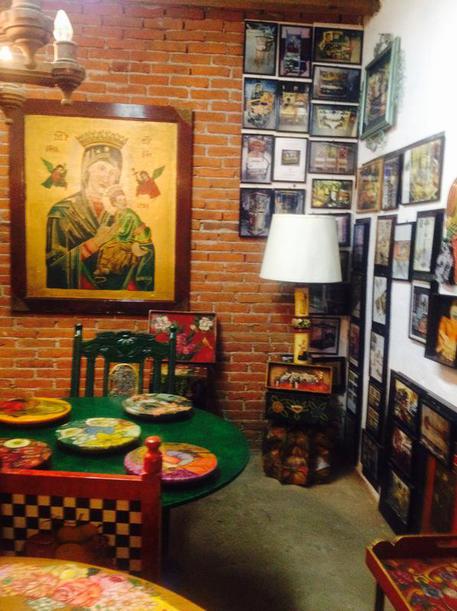
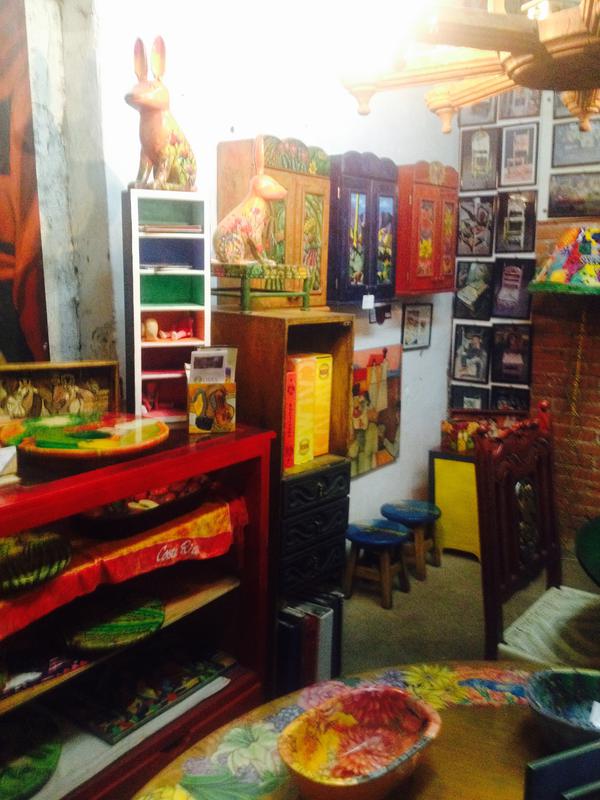
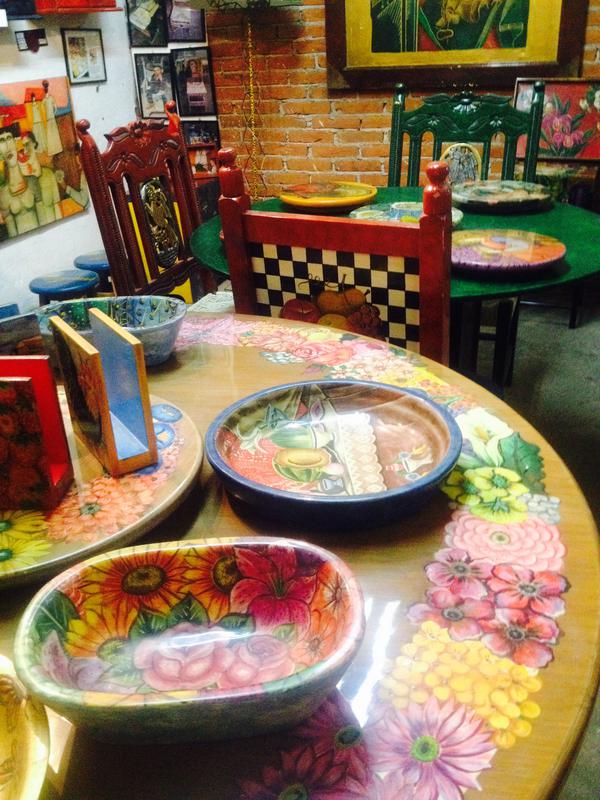
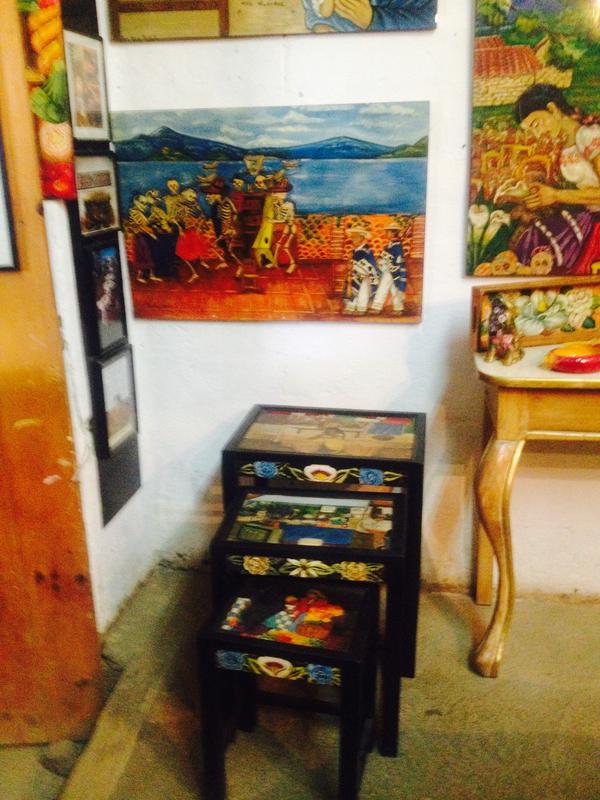
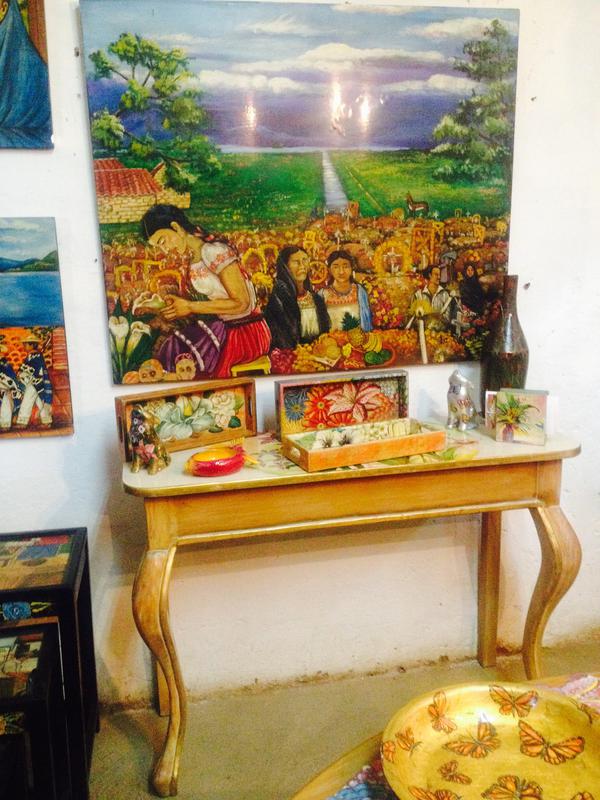
X - MFA Furniture
MFA FURNITURE
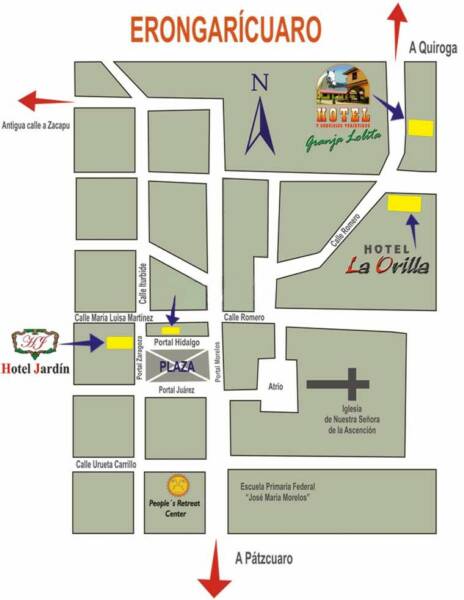
Coming from Patzcuaro is the MFA Eronga co-op. It's about 17k.
After leaving Uricho, you pass the Pemex on the right, and head up the hill into Erongaricuaro. Turn right past the large auditorium and school on the right.
MFA is on the right, about halfway down the hill before Lake Patzcuaro.
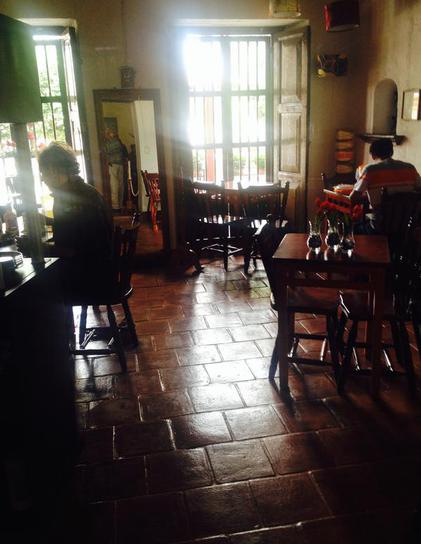
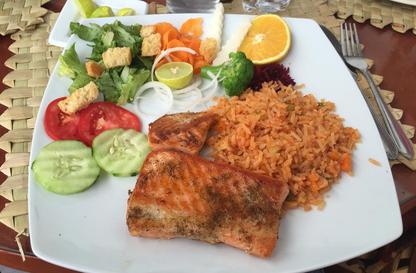
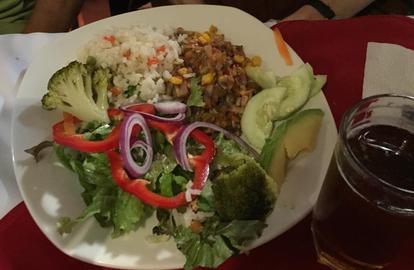
Mary's is one of the oldest restaurant families around Lake Patzcuaro. They have great breakfasts and delicious comidas. As you pass the Zocalo, Loncheria Dña Mary is to the left, on the opposite, top side, facing you and the Lake.
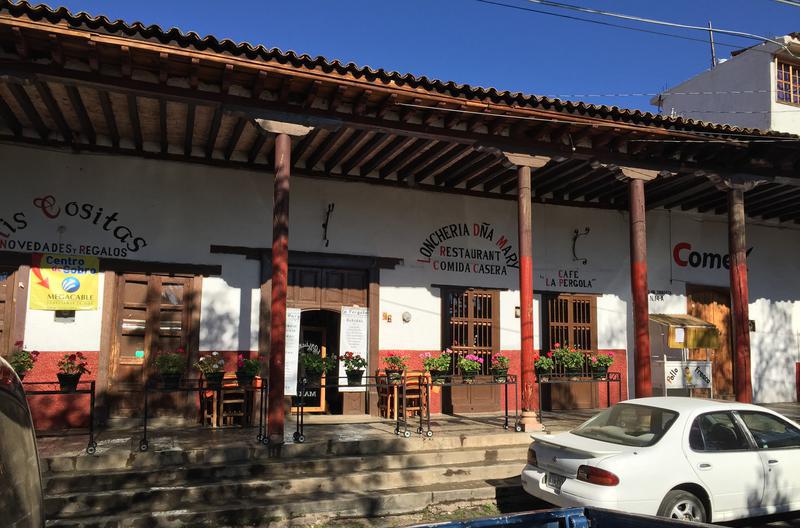
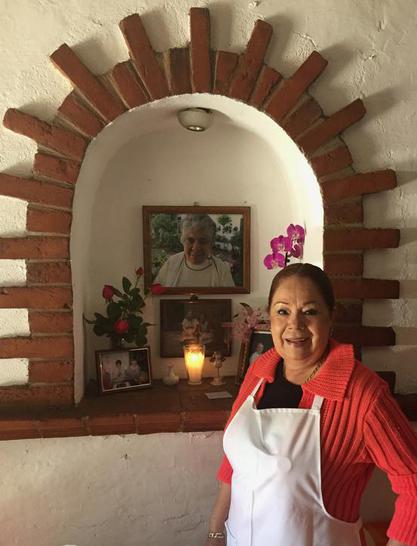
Carmen, standing in front of her mother's photo, Mary.
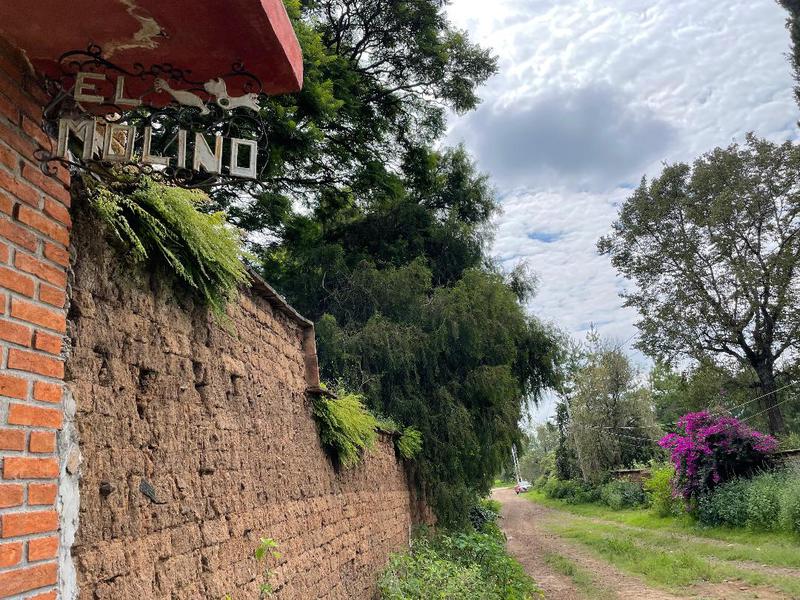
El Molino
In 1941, seeking mountains and water and termperate climate, Gordon Onslow Ford bought El Molino in Erongaricuaro, Michoacan.
Throughout the second world war, Onslow-Ford lived, worked and entertained at El Molino. The lore created around his visitors as well as the equally magnetic villa of Lena Gordon, practically next door to El Molino, separated only by a tract of land belonging to the 16th C. Franciscan monastery cum Seminary includes Frida Kahlo and Diego Rivera, Leon Trotsky and a list of art celebrities of that effervescent time in Mexico. But after an incident with the post revolutionary violent side of one of the locals, Onslow-Ford did not integrate much with the town during his residence. That would change with the new enigmatic owner, Dan Mayers who divulged to Lena Gordon that his vision was to survive nuclear holocaust and began a business of faceting German optical crystal into the pre zircon diamonds of the day. Fading from town memory in Erongaricuaro is the reason a building is called the House of the Diamond Workers, La Casa de los Diamanteros. El Molino’s history is anecdotal, hyperbolic surreal and unique.