email me
This page was last updated: June 19, 2010


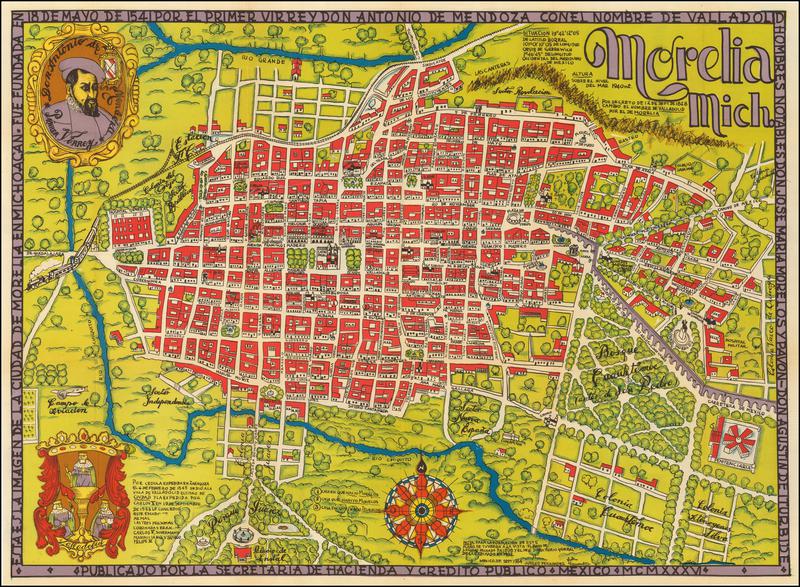
Click for detailed map!
Click on map for more detail.         Click RETURN arrow to return here!
Morelia: Flavor of Old Mexico
By CHRIS KRAUL, Times Staff Writer
MORELIA, Mexico --
From Quito to Cuzco, from Pelourinho to Popayán, I've been to some great old colonial cities and districts while working and bumming around Latin America the past 25 years. (Those are places in Ecuador, Peru, Brazil and Colombia, respectively, in case you're wondering.) But for my money, none is more evocative of times gone by than this, the capital of Michoacán state.

There have been times I've sat in Jardín de las Rosas, a 17th century plaza surrounded by the oldest music conservatory in the hemisphere on one side and the Baroque Las Rosas convent church on the other, half expecting a procession of carriages, sword-brandishing soldiers or religious flagellants to appear at any time. That's how strong the sense of time standing still is in this, my favorite corner of one of my favorite cities.

So when my two grown kids, Maria Helene and Christian, visited from California last December, I didn't hesitate to choose Morelia as an escape from Mexico City, the fast-paced and polluted capital where I live and work. It was an inspired choice. They loved the town--its people, its pink limestone colonial buildings, its food, clean air and quiet.

Morelia's uniqueness is due largely to the fact that it's in Michoacán, a region southwest of Mexico's capital that is embarrassingly rich in history, crafts and natural beauty. Day trips from here easily fill a long weekend or more: The migrating monarch butterflies, the pre-Columbian ruins of Tzintzuntzan and the cobbled streets of Pátzcuaro are all nearby and beckon. But for me, Morelia is a destination city in itself, and the ambience of its historic core district exerts the strongest pull.

Founded in 1541 and laid out in 1570, Morelia has managed to retain a pleasingly archaic character and proportion, even as so many other historic centers in Latin America have been erased from map and memory, victims of redevelopment, earthquakes and neglect.

The city spent its first 286 years as Valladolid, then in 1827 renamed itself Morelia after native son and revolutionary hero José María Morelos.

Morelia's historic district is no smattering of a few old buildings, but instead encompasses 120 blocks. It also spans more than four centuries, from the austere and fortress-like San Francisco church and monastery, begun in 1530, to the eclectic Palace of Justice, built in the 1880s by a free-thinking Belgian engineer named Guillermo Wodon de Sorinne.

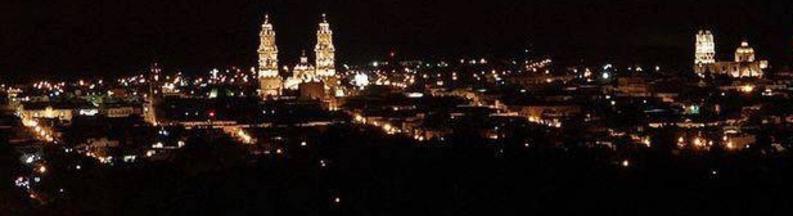
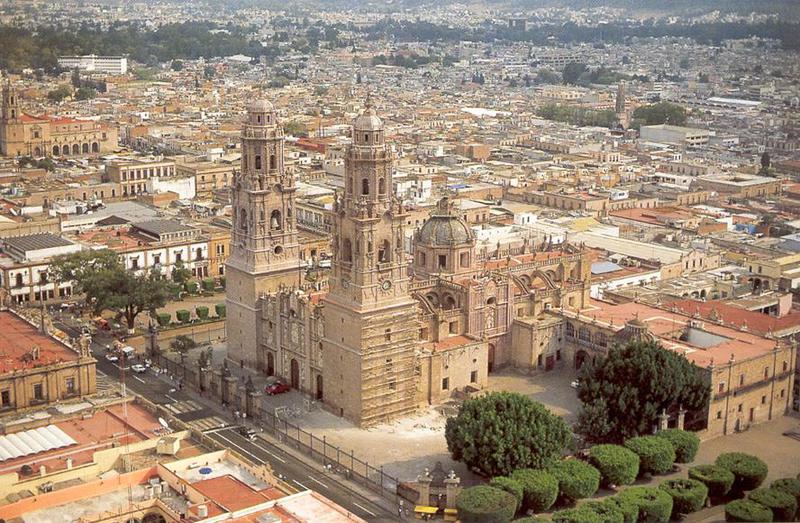
Vigilantly towering over the scene is Morelia's eponymous cathedral, one of Mexico's three largest and, I think, the most beautiful, best illuminated and most dramatic.

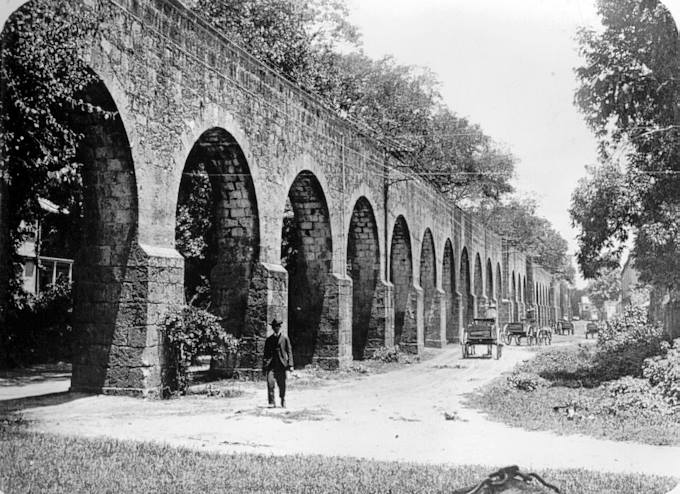
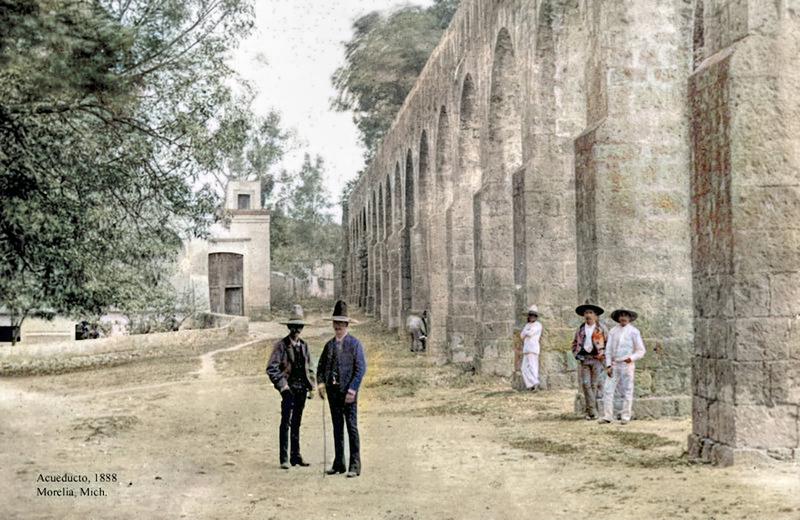
Framing the city's east side is perhaps the city's most striking relic and strongest preservation statement: a mile-long limestone aqueduct completed in the late 1700s but which hasn't funneled water into the city since 1910. UNESCO designated Morelia, the jewel of the Guanangaro Valley, as a World Heritage Site in 1991, an honor given to places whose historic significance and authenticity merits global recognition.

We approached the issue of how Morelia pulled off the feat of preserving its historic core as something of a mystery and began investigating. It turns out that the survival of old Morelia owes much to geology. The city sits on a miles-wide sheet of solid bedrock, a limestone layer from which many of its structures were quarried. Because of its foundation, Morelia has not been ground to dust by seismic shifts that over the years have leveled much of, for instance, Mexico City and Lima, Peru.

But most of the credit for Morelia's preservation is due to Morelians, who are jealous guardians of their past. Zoning laws, in place since the 1930s, forbid construction of anything in the historic center that is out of character. In fact, much of that district has been restored and rebuilt, but in strict adherence to design standards respectful of the city's past.

I had given the town quite a buildup, so my kids, both in their 20s, were eager to see the place after the four-hour luxury-bus ride from Mexico City. The road wound through the cornfields of Toluca Valley, past the piney Zinapécuaro mountains and down past Lake Cuitzeo, whose reflection of the pale blue Michoacán light reminded me of Lake Titicaca, which straddles the border of Bolivia and Peru.

Arriving in the new bus station five miles east of town, we quickly became aware of Morelia's climate: It's ideally mild and dry. At 6,300 feet, Morelia is 1,000 feet lower than Mexico City and so a bit warmer. Then, after the taxi ride into town, came the pleasant shock of streets devoid of the vendors, called ambulantes, who clog many Mexican cities to distraction. Morelia expelled street vendors last July, and, for now, its sidewalks are clear and the historic sights accessible.

Our choice of hotels was the only misstep of the trip. The Hotel Catedral, where we stayed for three nights opposite the cathedral, was noisy and poorly run. But in a subsequent trip in late March, I got it right. I checked into the Hotel Virrey de Mendoza, a colonial mansion dating back three centuries. In the historic heart of the city and loaded with colonial charm, it was converted in 1939 from a private home into a hotel named for the viceroy who founded Morelia; a third floor was added later. Its high ceilings, stained-glass atrium (covering what once was a courtyard) and collection of antique furniture produce just the right Old Mexico atmosphere.

My bad luck in lodging choice during the visit with my kids was a minor setback. Once we arrived we were quickly swept up in Morelia's history: It is regarded as the ideological cradle of Mexican independence. Miguel Hidalgo, the father of Mexican independence, taught at the Colegio de San Nicolás, which dates from 1570 and may be the hemisphere's oldest secondary school. One of his students was native son Morelos, the fiery military leader and martyr who was the closest thing to Mexico's George Washington.

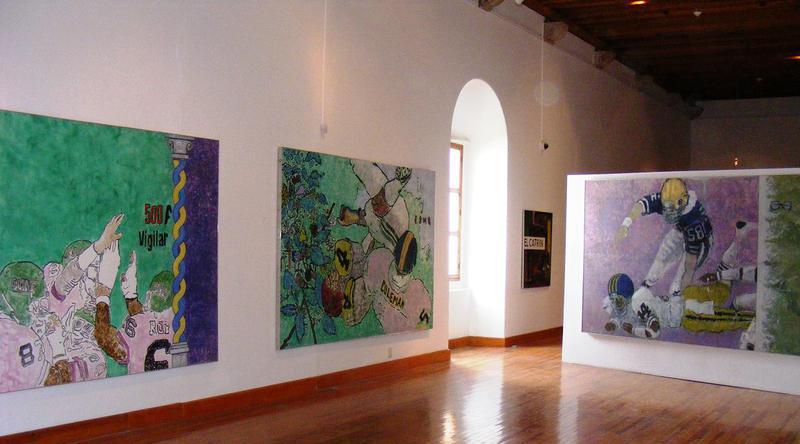
We came across tableaus of Morelia history painted in murals in many public buildings by Alfredo Zalce, who, at 94, is one of the last survivors of the legendary generation of Mexican muralists that include Rivera, Siqueiros and Orozco. Zalce's earthy, vivid colors and harmonious compositions capture for me the essence of the Michoacán aesthetic.

On our first day, my son and daughter awoke in time for their trip to the special forest preserve in eastern Michoacán state. There, from October through March, monarch butterflies complete their 3,000-mile migration from as far away as Canada. It was a three-hour bus ride to Angangueo, then an hour trek up to see the insects clinging to tree branches in shimmering swarms. But it was worth the trip, they said.

"They were a living, moving accumulation of orange," Christian said. As he and Maria Helene approached the trees, butterflies rained down on them, dead or dying after mating. "A little morbid, considering they are all falling to their deaths after one last romp," Maria Helene added.

(In January, a few weeks after they visited, the beautiful insects' progeny died in a rare winter freeze that gripped the region. The butterflies will be back in the fall but possibly in greatly reduced numbers.)

While the kids were taking in nature, I was taking the waters at Los Azufres National Park, having chosen to visit the mineral baths there. Also in the mountains east of Morelia, amid geothermal power plants and sulfur mines, the Laguna Larga resort has two outdoor pools and another set of four thermal baths across the street and up the hill from its wood cabanas.

Locals favor the no-frills facility; you pay only $3 and bring your own towel. And like the trip to see the butterflies, it's worth the time and expense (a 90-minute, $60 taxi ride) to get there. The drill at Laguna Larga is the same as at any thermal bath: sit, soak and let the mineral waters work their tranquilizing and mind-clearing magic.

The next morning, while the kids slept in, I took an early morning walking tour of the central city that featured enthusiastic, bilingual guides. The guide on my tour, Alfredo de la Cruz Ibarra, told me how the city grew wealthy from local gold and copper mining, and how by the 1700s it had became one of the Catholic church's three largest administrative centers in Mexico, a status that attracted a dozen religious orders to build monasteries and convents, most still standing.

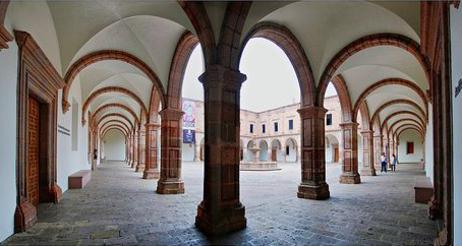
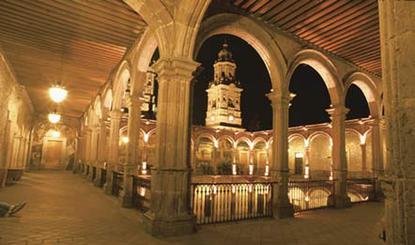
The first stop on the tour was the former Jesuit seminary called the Palacio Clavijero, begun in 1660 and now occupied by the Michoacán state government. It is perhaps the city's brightest architectural gem, its two tiers of graceful colonnades bespeaking temporal power and celestial affinity. Then we walked down Avenida Nigromonte to Jardín de las Rosas, an island of tranquillity and one of dozens of plazas that bejewel Morelia. The convent included a school for girls founded in 1743 that became the hemisphere's first music conservatory.

According to De la Cruz, the guide, the name Jardín de las Rosas took on a double meaning because it provided a vantage point from which eligible bachelors could view the "flowers" (schoolgirls) who would present themselves on the building's unusual open-sided rooftop gallery when classes and rules permitted.

We stopped long enough to enjoy lunch at the 200-year old Hotel de la Soledad, one of Mexico's oldest lodgings. The restaurant there, La Capilla, serves delicious Michoacán specialties, including pollo plazero, chicken cooked with carrots and potatoes, and corundas, which resemble tamales covered in a tomato, onion and garlic sauce.

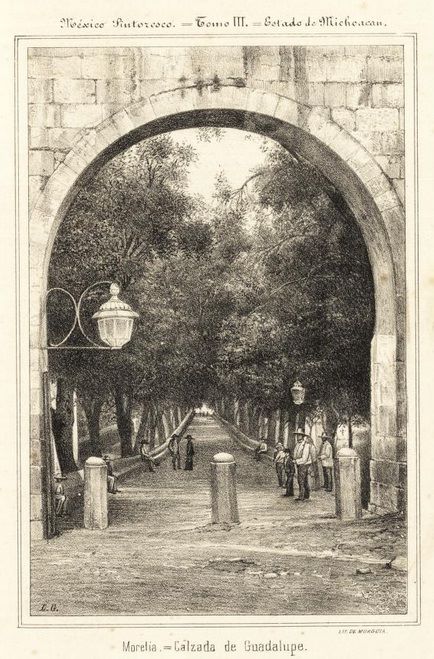
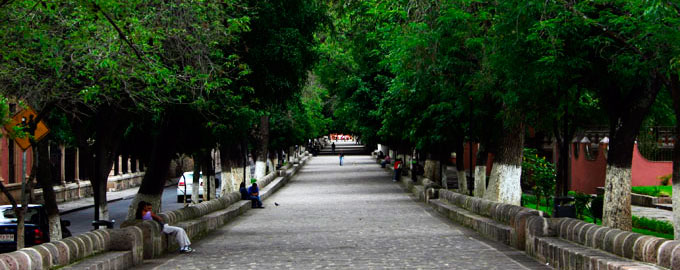
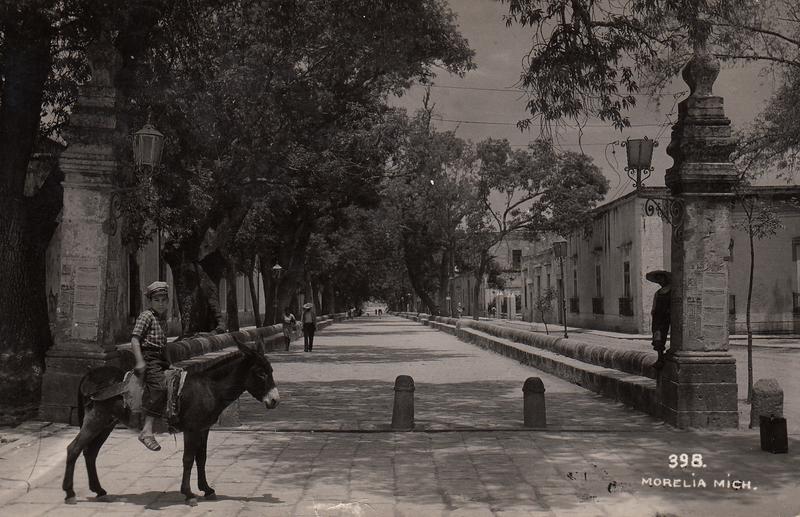
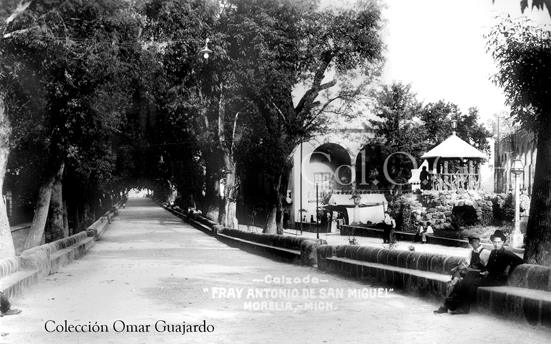
Perhaps the most unusual remnant of Morelian times gone by is the three-quarter-mile-long Calzada Fray Antonio de San Miguel, a tree-lined processional walkway completed in the mid-1700s that is paved with limestone and lined with stone benches. The Calzada connected the city to a shrine of Our Lady of Guadalupe, but now it's a beautiful pedestrian causeway conducive to reflection as well as passionate encounters: It's a favorite trysting zone for local adolescents.

The tour ended at the immense main cathedral, completed in 1744 after 80 years of construction. Upon entry, all eyes fix naturally on the gleaming, half-ton solid silver monstrance that sits atop the main altar. It was crafted in 1794, but revolutionary turmoil prompted church fathers to hide it in the cathedral basement for 140 years. It was finally returned to the main altar in 1950.

(The city tours, then offered every weekend by the Michoacán state tourism office, have been discontinued since our visit, but the staff recently assured me they would soon resume.)

The next morning, we went to the Michoacán Regional Museum, a remarkable storehouse of history that features my favorite Zalce mural over the stairwell. The allegorical representation, called "Cuauhtémoc and History," depicts how the exploitation of Mexico and its indigenous peoples continued long after Hernando Cortes, the Spanish conquistador. In one of the museum's upper rooms is a true curiosity, an anonymous wall-size 18th century painting that portrays the 1738 procession of cloistered nuns from Las Rosas to their new convent, Las Monjas, several blocks away. The painting shows how church laymen tried to shield the nuns, who were prohibited for life from any public contact.

The veil has long since been lifted. Religious orders have not occupied Morelia's convents and monasteries since the late 1850s, when the reform movement under Benito Juárez stripped all religious orders in Mexico of their once-massive property holdings. Las Monjas has been turned into federal offices, its several interior patios perfectly accessible to tourists.

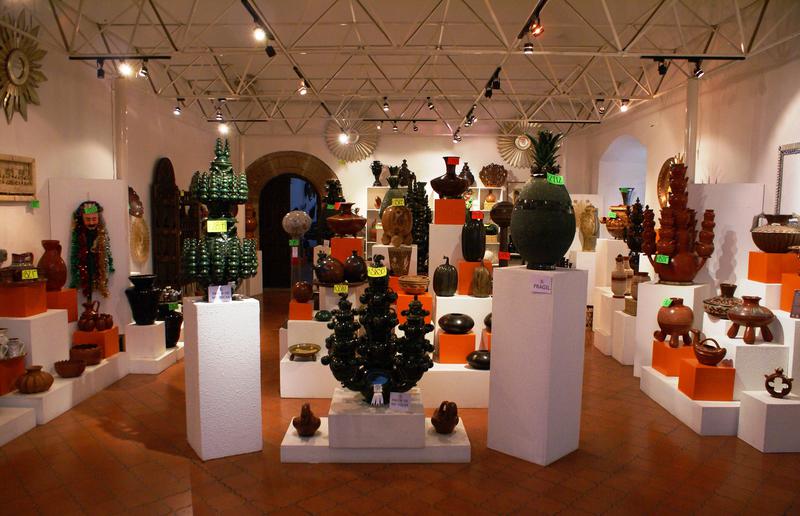
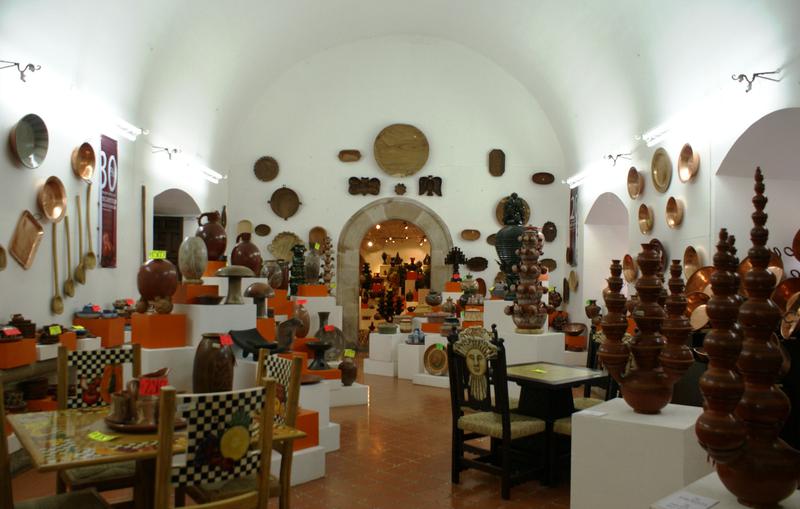
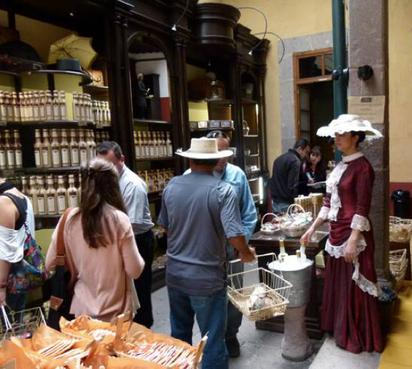
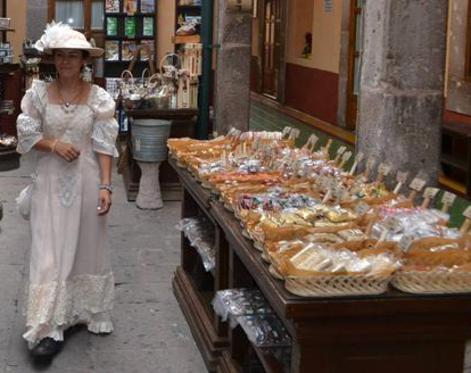
We cut our visit short to run to the Casa de Artesanías, the huge state-run handicrafts store occupying an entire building, a former monastery, next to San Francisco Church. The government sponsors contests among Michoacán's craftspeople, with the winning products earning shelf space at the artisans' shop.

There we saw an unbelievable variety of beautifully finished things from Michoacán towns: guitars made in Paracho, intricately designed hemp floor mats from Pátzcuaro, baskets from Santa Cruz Tanaco, ceramics from Zinapécuaro and wooden masks from Ocumicho.

On our last night we visited Tzintzuntzan, half an hour's drive from Morelia. There, under a full moon lighting Lake Pátzcuaro and the archeological park's five yacates, or pyramids, we saw a fiery juego de pelota in what was once a ceremonial court. Teams of 20 youths batted around an ignited pumpkin-size ball in a reenactment of the Purépecha Indian ceremony of "new fire," traditionally held at the beginning of a new year after the use of fire had been banned for five days.

Somewhat out of breath but happy, we ended our four-day trip having just scratched the surface of Morelia and Michoacán. There will be return visits--I hope soon--to visit Michoacán towns on feast days, attend the August guitar festival at Paracho, and be in Morelia for the organ festival in May, when the cathedral's 4,600-pipe instrument is played.

Still, we left having caught an unforgettable glimpse of Morelia's rich history. And we accomplished our purpose in leaving the enervating capital city to see a part of Mexico with a living past but not overrun with tourists, one with a vibrant regional character but not at all isolated from the rest of the world.
___
Chris Kraul, based in Mexico City, is a Times foreign correspondent who covers Latin America.

Jonathan Roeder, TheNewsMexico.com - 2/1/2002
MORELIA, Michoacan -

No matter where you wander in Morelia or how lost you get, you will always be intrigued.

Indeed, getting lost might be one of the first things you wish to do upon arriving in this city of about 600,000, the capital of the western state of Michoacan. Don't be discouraged by the outlying areas of town, which are scruffy and modern.

Head straight to the center of town, where there are hotels, restaurants, museums, cathedrals aplenty. Your first impressions will be that Morelia is clean, orderly, colonial and strikingly beautiful.

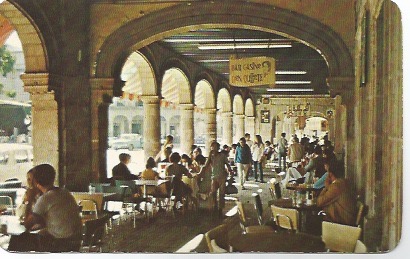
You will not find the riot of colors that cover some other Mexican colonial highland jewels, such as Guanajuato. Instead, everything is stately carved pink stone with baroque facades and a wealth of arcades and arches, giving an air of distinction and nobility.

And Morelia has the history to back up its dignified appearance. It was founded in 1541 as Valladolid, scarcely 20 years after the Spanish conquest, named after the Spanish town of the same name to attract well-to-do residents. In 1828, after Mexico separated from Spain, the city was renamed Morelia after independence hero José María Morelos y Pavón.

Today, city ordinances require all buildings in the town center to be built in the same colonial style. A little over a year ago, the city relocated all the street vendors in the city center, so it avoids the eyesore of the tianguis market vendors that spread like fungus across other Mexican cities.

Strolling down the narrow sidewalks, you will catch glimpses of courtyards of private homes, covered with tiles and draped with plants. This is enough to provoke longing for a similar residence, as it more than likely makes your own home seem rather standard. Perhaps the homeowners are aware of this and purposefully leave their wieldy antique wooden garage doors ajar.

Then, a plaza will open before you: it could be the Plaza Central (or zócalo), Plaza de los Mártires or the Plaza de Armas, or countless others, there is certainly no lack of them. They are all surrounded by colonial structures that beg to be examined closely.

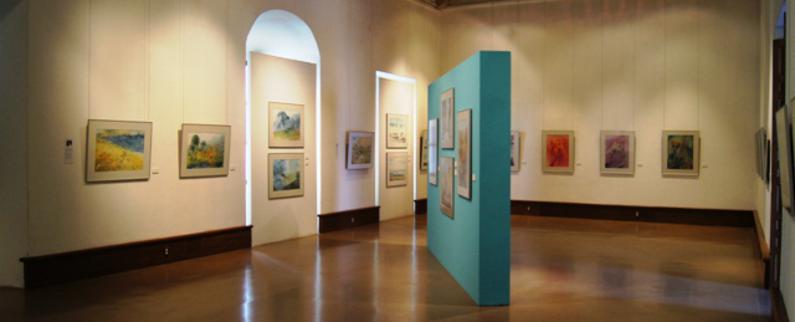
Some of these colonial buildings are now museums, such as the Museo del Estado - or State Museum - which documents the Michoacan's history from the local Tarascan Indians until the Mexican Revolution, or the Casa de la Cultura & Museo de la Máscara (House of Culture and Mask Museum).

Visitors are also permitted to wander through some government buildings such as the State Supreme Court and Government Palace (Palacio de Justicia and Palacio del Gobierno, respectively) where the city's history and namesake hero are well-documented in colorful murals.

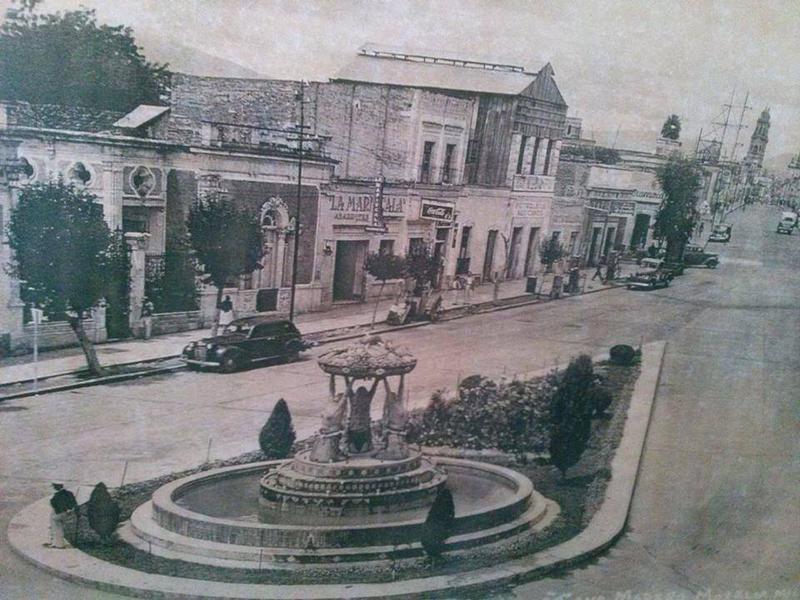
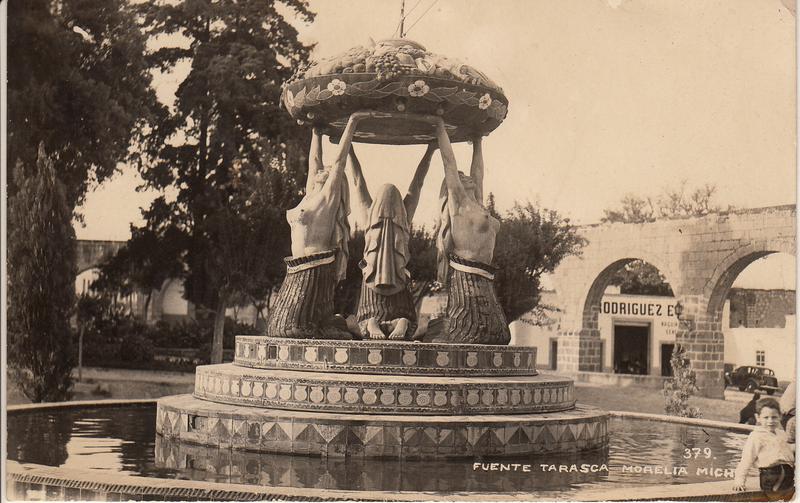
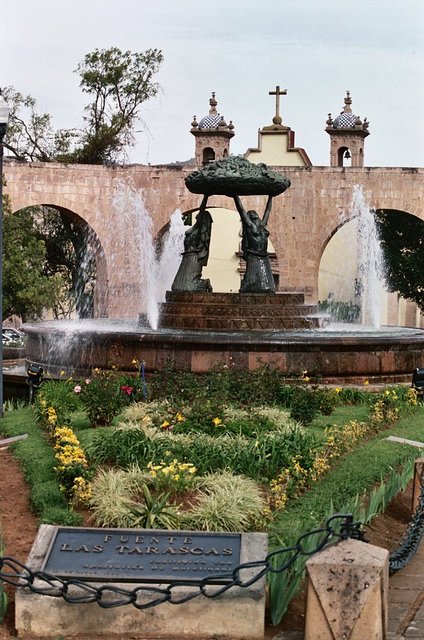
When it starts to get dark, head a couple blocks east of the Zócalo to the Aquaduct and Tarascan fountain, which are beautifully illuminated. The Aquaduct is of ancient Roman style and was built in 1788. Traffic now weaves in and out of its many arches.

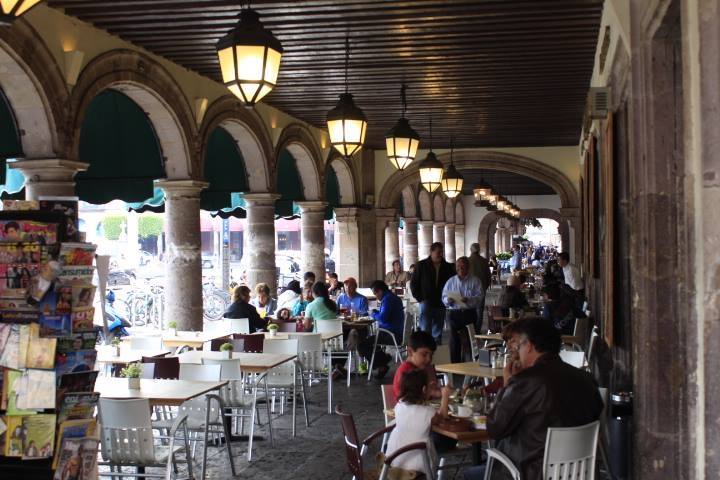
One will not go hungry in Morelia, either, as plenty of the colonial buildings have been converted into eateries and restaurants with welcoming, romantic atmospheres. An exceptional choice for both setting and traditional Michoacan cuisine is Los Comensales, north of the Zócalo. They also have cheap and delicious comida corrida during lunch hours.

For evening drinks, try the Café Catedral for its beautiful view and festive atmosphere. It's directly across from the cathedral in the Zócalo

Regarding lodging, Morelia has plenty of modern, acceptable chains, but a far better alternative is to find an enchanting colonial hotel in the center of town, closer to all the sights. Many are quite affordable, but check the rooms first. The Hotel D'atilanos, for example, boasts an attractive courtyard but also has rooms darker than dungeons.

Another attractive aspect of Morelia is its proximity to other tourist attractions. The city serves as an ideal launching pad for day-trips to the butterfly sanctuary, Patzcuaro and Uruapan.

Morelia is located three and a half hours due west from Mexico City and is serviced by air and bus routes.
Lake
Patzcuaro
Morelia

Morelia has a tourist website with a wealth of iniformation. 
For a list of events, check calendar under "events."
http://www.visitmorelia.com.mx/
(click ENGLISH)
Before the arrival of the Spaniards, the region was inhabited by a people known as the Pirindas, and the place was called "Guayangareo". Morelia was officially founded on May 18, 1541 by the first viceroy of New Spain Antonio de Mendoza, as "City of Michoacán". It was inhabited by 50 Spanish noble families and by purepecha Indians (brought from Patzcuaro and Tiripetio to serve the Spanish). In 1545, the name was changed to "Valladolid".

Unlike Patzcuaro, indigenous city of which was an enemy for a long time, Valladolid was essentially Spanish, inhabited by conquistadors and their descendants, and by upstarts that came from the metropolis.
In 1547 it got the title of city, and was given a coat of arms in 1553.

The rivalry between Patzcuaro and Valladolid occurred when they began a dispute about where the seat of the bishopric of Michoacan should locate. The Spaniards wanted Valladolid to be made into an episcopal city, but Vasco de Quiroga, who always defended the Indians from the Spaniards, wanted this title to be granted to Patzcuaro. In 1571, six years after Vasco de Quiroga's death, the king of Spain Philip II upgraded Valladolid to an episcopal city.

In 1580, Valladolid replaced Pátzcuaro as the capital of Michoacán. During the colonial period a number of religious orders established themselves in the city, allowing it to take an important place in the history of art and culture in Mexico. Important architectural sites from the colonial period include the Catedral de Morelia, the Aqueduct (built between 1785 and 1789 by Fray Antonio de San Miguel), the Governor's Palace, the Palacio Clavijero, and numerous churches, convents, and houses.  The Conservatorio de Música de las Rosas of Morelia was the first music conservatory in the Americas.

The city is the birthplace of José María Morelos (1765), after whom it was renamed in September 12, 1828, and who along with Miguel Hidalgo y Costilla began the Mexican War of Independence from Spain in 1810. It was also the birthplace of Agustín de Iturbide (1783), the first Emperor of Mexico and Josefa Ortiz de Domínguez.
El Carmen Church
Morelia